

A Brief Profile of Thi Vũ Võ Văn Ái
(1935 – 2023)
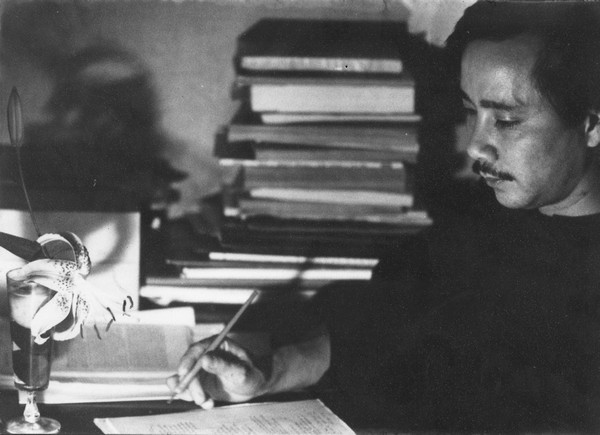
Võ Văn Ái, also known by his pen name Thi Vũ, was an exceptional man. For some, he was above all a talented writer, poet and scholar, with a literary career spanning over six decades. For others, he was especially a tireless champion of human rights, democracy and freedom, one of the first and only Vietnamese to speak regularly at the United Nations to draw world attention to the dire human rights situation in Vietnam. In fact, Võ Văn Ái was all these things, and many more.
Born in Central Vietnam on 19 October 1935, he was a Buddhist and proponent of non-violence. His book of “Essays on non-violence”, published in Saigon in 1968, inspired a whole generation of young Vietnamese in a country torn by war. Later, as international spokesman of the Unified Buddhist Church of Vietnam (UBCV) under the leadership of Thích Huyền Quang and Thích Quảng Độ, his writings and actions played a decisive role in shaping the Buddhist movement for religious freedom, democracy and human rights.
Through his long years of advocacy, Võ Văn Ái encouraged young civil society activists in Vietnam to use international forums and mechanisms to speak out against injustice and press for improvements and lasting change.
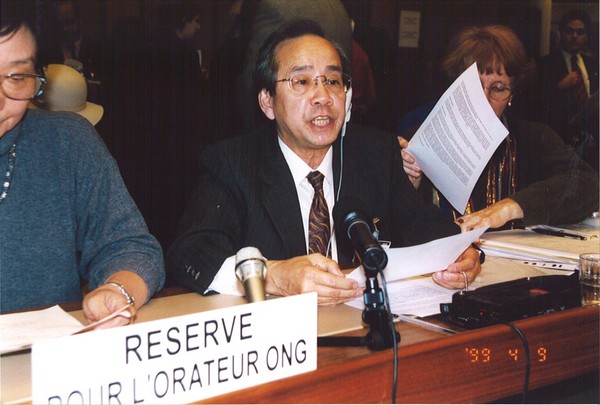
In 1975, he founded the journal Quê Mẹ and the Vietnam Committee on Human Rights (VCHR) in Paris. From 1989 to 2007, he served as Vice-President of the International Federation for Human Rights (FIDH), one of the world’s oldest and most respected human rights organisations.
Võ Văn Ái played a key role in drawing world attention to the plight of political prisoners in Vietnam’s “reeducation camps”. In 1978, he helped to launch the “Ile de Lumiere”, the first rescue ship to save boat people in the South China sea. This campaign not only saved thousands of lives, but deeply impacted the political thinking of the times, transcending political prejudices and unlocking the “omerta” of silence that shrouded Vietnam in the aftermath of the Vietnam War.
Võ Văn Ái lectured extensively on Vietnamese culture, history and philosophy in Europe, Asia and the USA, and contributed to publications such as Le Monde, the Wall Street Journal, World Affairs Journal, Newsweek, etc. In addition to numerous articles and reports, his written works include 21 books of poetry, essays, philosophy and studies on Buddhism and Vietnamese history.
On his death in 2023, tributes to his life and work were published in the international media and by organisations around the world. The following obituary appeared in the French daily Le Monde (31 January 2023):

Death of Vo Van Ai, defender of human rights and religious freedom in Vietnam
Well known for launching the “Boat for Vietnam” campaign in the late 1970s to rescue Boat People fleeing the newly-established communist regime, in 1985 he filed the very first Complaint at the United Nations against the Vietnamese government for violations of human rights. He died on 26 January 2023, aged 87.
Tireless defender of human rights and Buddhism in Vietnam, poet and author, well-known in France for having launched the campaign “A Boat for Vietnam” in the late 1970s to rescue boat people fleeing the new communist regime, Vo Van Ai died on January 26, in Paris. He was 87 years old.
His action during his exile in France was carried out through two organizations he founded after the fall of Saigon in 1975: the Vietnam Committee on Human Rights and the review Quê Me: Action pour democracy in Vietnam, printed at the printing press he opened in Gennevilliers (Hauts-de-Seine). Devoted to human rights, democracy and Vietnamese culture, Quê Me (“homeland”) had a considerable influence both on the Vietnamese diaspora as well as inside Vietnam, where it was circulated clandestinely.
Vo Van Ai was one of the first persons, via his NGO, to reveal the repressive campaigns of the Vietnamese Communist Party. In 1978, he drew up a map of the “gulag” in his country, which included some 150 re-education camps. In November 1978, deeply shocked by the fate of 2,500 Vietnamese refugees stranded on the Hai-Hong, a freighter which the authorities of Indonesia and then Malaysia refused permission to dock, he launched a campaign to charter a ship, Ile-of-Light, to rescue boat people in distress.
Support for independence
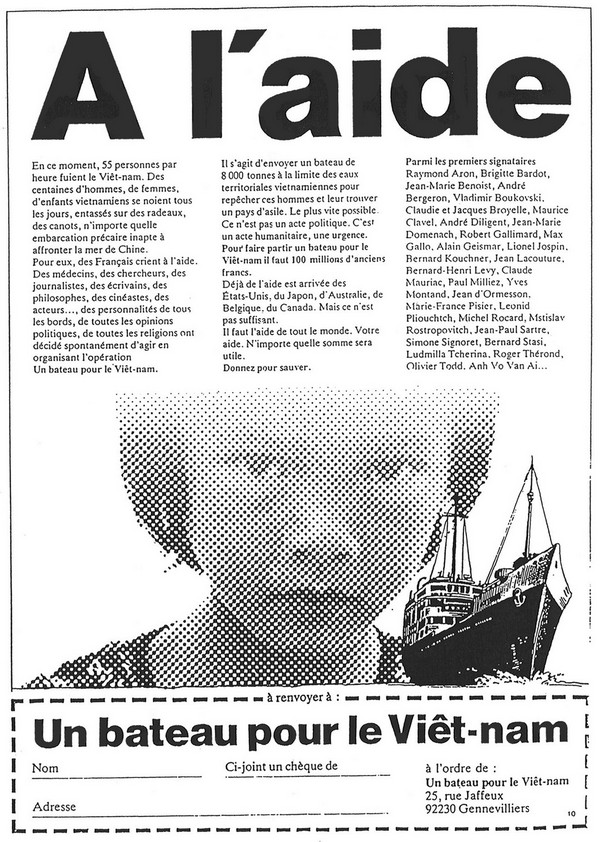
His initiative came up against the reluctance of part of the French left who campaigned against the Vietnam War: he was even the target of intimidation measures by the communist authorities of Gennevilliers and a failed attempt to set fire to his printing press. But Vo Van Ai managed to rally the support of André Glucksmann, Olivier Todd, editor-in-chief of L’Express, Lionel Jospin, Yves Montand and Simone Signoret, as well as Simone de Beauvoir and Jean-Paul Sartre. At that time, the appeal “SOS, a boat for Vietnam”, showing the face of a child and a sinking cargo ship, flourished in the French press. The campaign had a huge impact in France, where many Vietnamese asylum seekers would subsequently be given a home.
Vo Van Ai was born on October 19, 1935 (although his “official” birth date is 1938). He was born in the mountains of northern Vietnam, where his father, a telegraph operator in the French colonial administration, had been sent to work. He grew up in Huê, the former imperial capital, and his family’s hometown. He was part of a Buddhist youth movement that was also covertly supportive of the movement for independence.
At the age of 11, he was arrested by the general security, the colonial administration’s political police. He told his family that he had been suspended in the air by a rope attached to his wrists behind his back. He witnessed the torture practiced on men and women around him. He continued his involvement in support of independence by distributing leaflets or collecting donations.
In 1955, Vo Van Ai left South Vietnam, which was then governed by the Catholic and authoritarian President Diem, and where he did not feel safe. He went to France, then Germany, where he began studying medicine. In Saigon, the immolation of a monk on June 11, 1963 shocked the world. Vo Van Ai then devoted himself to promoting a Buddhist peace solution to the war between South Vietnam and the Communist North. In 1963, he founded the Association of Overseas Vietnamese Buddhists, then in 1964 became the international representative, alongside Buddhist monk Thich Nhat Hanh, of the Unified Buddhist Church of Vietnam (UBCV), which obtained official status in South Vietnam after the fall of the Diem regime in 1963.
In 1985, on the tenth anniversary of the fall of Saigon, Vo Van Ai filed the first complaint for human rights violations at the UN in New York against the Vietnamese government: his file detailed over 500 pages of ongoing violations within the Socialist Republic of Vietnam. From then on, he ceaselessly engaged in alerting international bodies, campaigning with democratic governments and parliaments and speaking each year at the United Nations Human Rights Council.
In the 1990s, Vo Van Ai also returned to the Buddhist struggle, becoming the international spokesperson for the UBCV, banned since 1975 by the communist regime. He played a crucial role in reshaping the fight for religious freedom of Vietnamese Buddhist dissidents into a broader movement for democracy. He was naturalized French in 2016.
October 19, 1935 Born in Huong Thuy (Vietnam)
1963 Founded the Association of Overseas Vietnamese Buddhists
1978 Launched the “A boat for Vietnam” campaign
1985 Files Complaint to the UN against the Vietnamese government
January 26, 2023 Death in Paris
Brice Pedroletti
© Le Monde – This translation of the Obituary on Vo Van Ai is published with full authorization from Le Monde newspaper. We extend our warm thanks to Le Monde for this.
Võ Văn Ái was amongst the first human rights defenders to speak at the Oslo Freedom Forum, organised by the New York-based Human Rights Foundation in 2009, alongside speakers including Elie Wiesel, Elena Bonner, Vaclav Havel, Vladimir Boukowsky, Armando Valladares and Harry Wu.
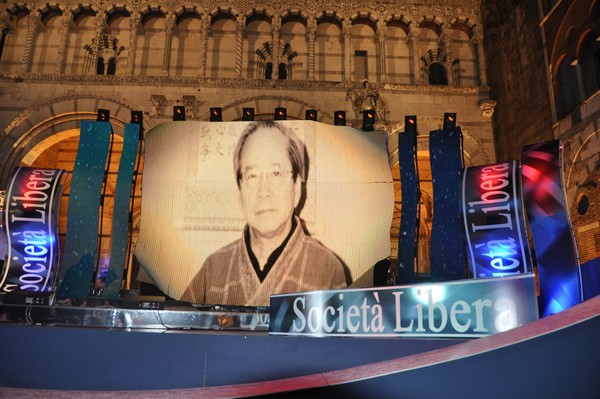
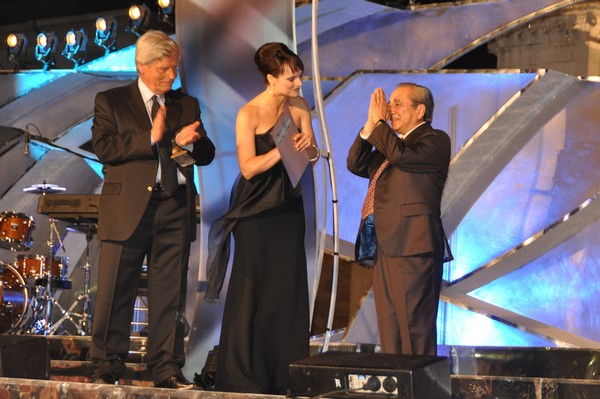
In 2011, he received the prestigious International Freedom Prize created by Società Libera under the patronage of the President of Italy to honour “international personalities or institutions that have proved to excel in promoting the ideals of freedom”. Previous recipients included former Polish President Lech Walesa and Uyghur leader Rebiya Kadeer. Võ Văn Ái dedicated the award to “90 million people deprived of their human rights in Vietnam today”.
Võ Văn Ái was also shortlisted for several prestigious human rights awards. In 2021, at the University of Berkeley, California, the literary circle Gio-O honoured Thi Vũ Võ Văn Ái for his role as “the sole Vietnamese intellectual with a long-standing engagement of international advocacy for the rights of the Vietnamese people” and as “a beacon illuminating the vitality of the Vietnamese language”.
Thi Vũ Võ Văn Ái was loved and appreciated by people all over the world. Below are some of the many tributes sent by international personalities, friends and followers, during his life and after his passing:
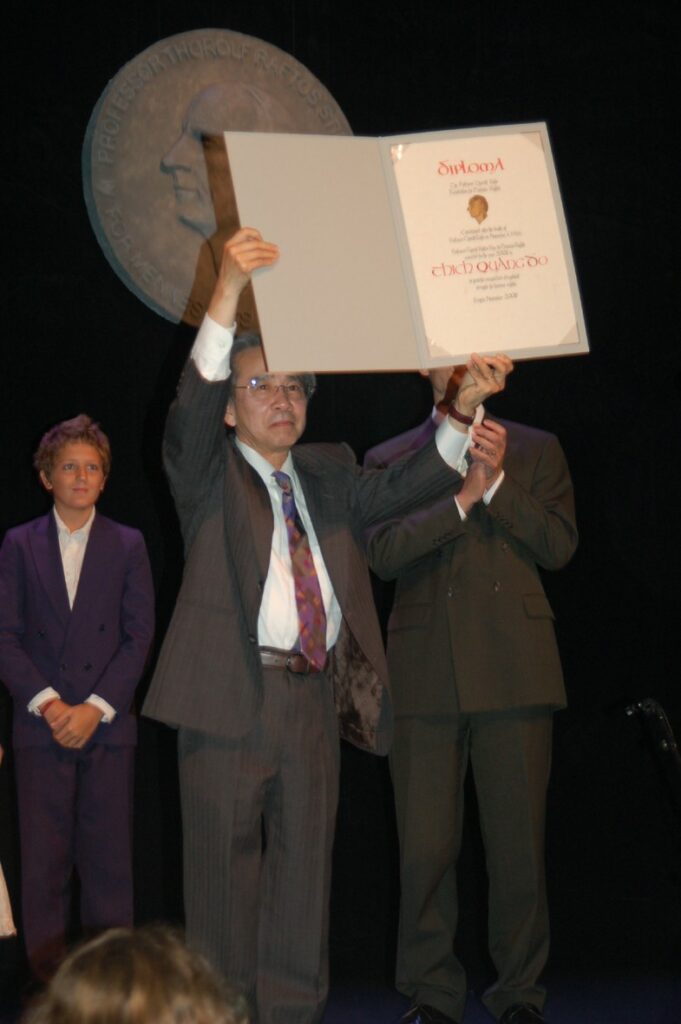
“Vo Van Ai has dedicated his life in courageous, loving and persevering service for human rights and democracy for the people of Vietnam. I join my voice with his many friends in Vietnam and around the world in congratulating and thanking Vo Van Ai, for his inspirational life and work for Vietnam and humanity.”
Mairead Corrigan Maguire,
Nobel Peace Prize laureate, Ireland
“Vo Van Ai is a true champion of the cause of freedom. During the long, dark years since the fall of South Vietnam in 1975, he has never let the world forget the plight of the Vietnamese people and the steadfast refusal of the Unified Buddhist Church of Vietnam to submit to totalitarian control. He has always spoken and acted with quiet dignity, but he is unyielding in his determination to defend the political and religious rights of the Vietnamese people. He has the courage of his convictions and a will of iron”.
Carl Gershman,
President, National Endowment for Democracy, USA
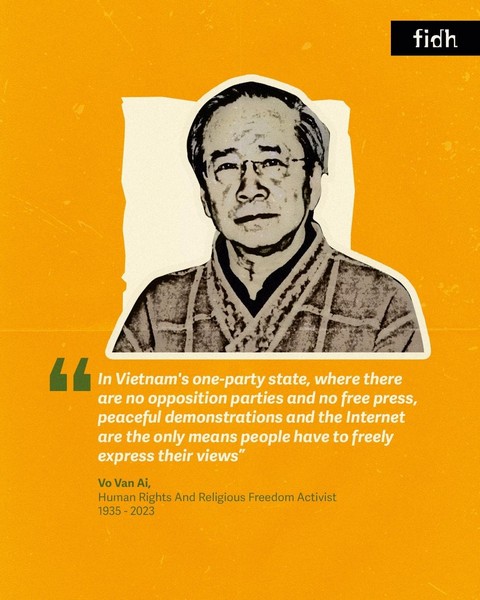
“Vo Van Ai has devoted his life to the peaceful struggle for democracy and individual rights in Vietnam. As one of the most outspoken and determined leaders of the freedom movement for his country, Vo Van Ai was the first to draw the world’s attention to the more than one-million people arbitrarily sent to Vietnamese “re-education camps”. With an unshakable commitment to justice, he is an inspiration to those fighting for human rights across the globe.”
Thor Halvorssen,
Founder of the Oslo Freedom Forum,
President, Human Rights Foundation, New York
“Võ Văn Ái was an exceptional man. A man hated by cowards, feared by dictators and beloved by all those with tender hearts.”
Véronique Rouault,
Acting together for human rights, Lyon
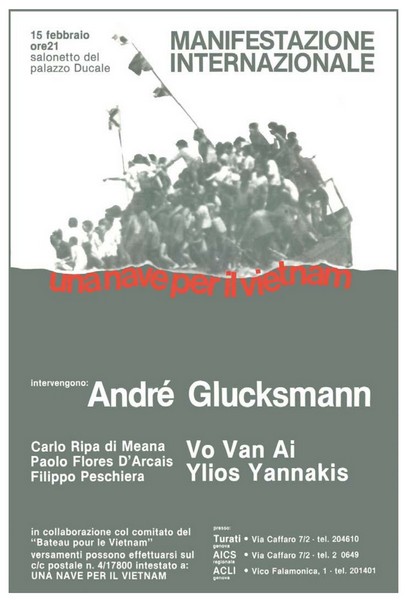
“Thi Vũ Võ Văn Ái was a gifted poet, brilliant scholar, noble soul and patriot. But above all, a man with a passion for life.”
Facebook, Vietnam
“Võ Văn Ái was my hero. He was fighting for freedom not only for the people of Vietnam, but also for everyone around the world.”
Ryota Jonen,
President, World Movement for Democracy
“The poet Thi Vũ Võ Văn Ái was one of the greatest geniuses of the Vietnamese language. How sad that his writings are not easily accessible here [in Vietnam].”
Trần Đăng Thành, Writer, Vietnam
“Thi Vũ Võ Văn Ái will be remembered as a scholar and talented intellectual, a man who was afraid of nothing and who dared to take action. He was a human rights advocate of international renown, a man of letters, writer and academic.”
Liaison Office of Associations and Free Vietnamese of France
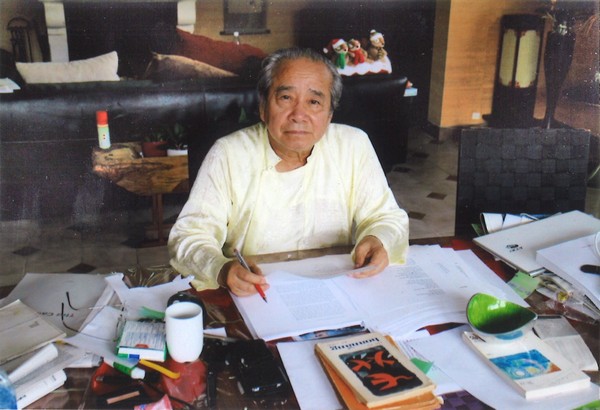
* * *
Published works:
- Mùa Xuân Xa [Far-away Spring] (Poetry, Paris 1966 – in Vietnamese)
- Mùa Rêu [Season of moss] (Poetry, Paris 1966 – in Vietnamese)
- Je vous parle de ces jours absents (Poetry, 1968 – in French)
- War resistance and War Reality (Paris, 1968 – in English)
- Un Ramo d’Incenso (Poetry, Italy 1968 – in Italian)
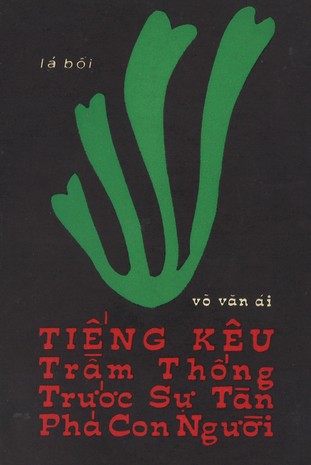
- Tiếng Kêu Trầm Thống Trước Sự Tàn Phá Con Người [Warning Cry on the Destruction of Mankind – Essays on non-violence], Lá Bối, Saigon 1968) – in Vietnamese)
- Bất Bạo Động và Bất Tạo động [Nonviolence and Non-aggression] (Vạn Hạnh, Saigon 1968 – in Vietnamese)
- Answer of Fire (Unicorn Press, USA, 1968 – in English)
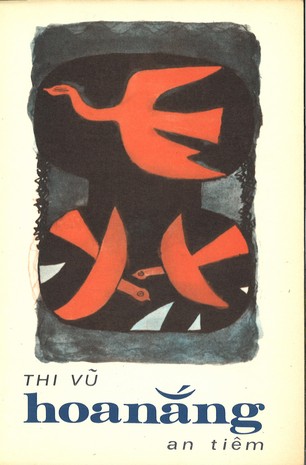
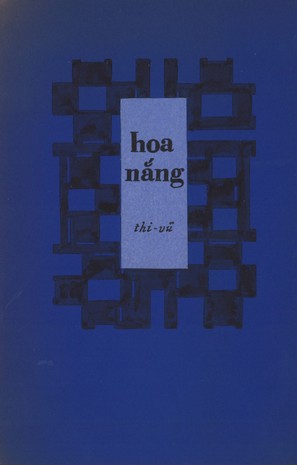
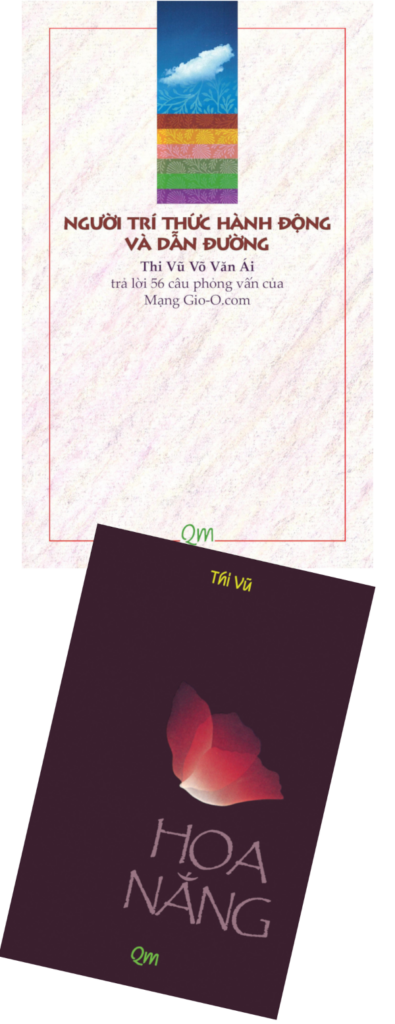
- Hoa Nắng [Flowers of Sun] (Poetry, Rừng Trúc, Paris 1966, An Tiêm, Saigon 1970, Quê Mẹ Paris 2015 – in Vietnamese)
- Twelve Poems (Unicorn Press, USA, 1969 – in English)
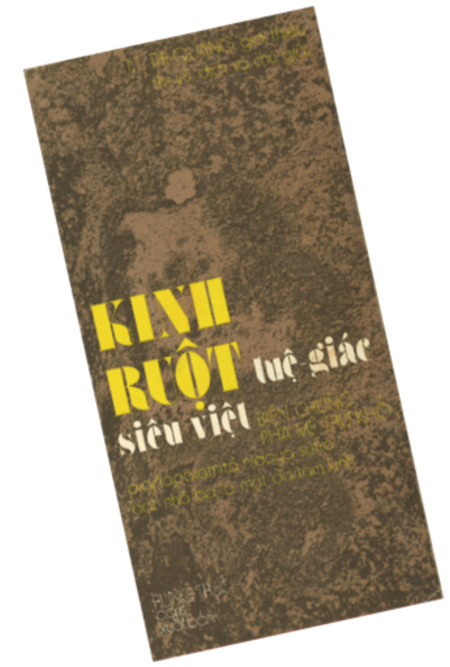
- Kinh Ruột Tuệ Giác Siêu Việt – Biện chứng Phá Mê Trừ Khổ [Dialactics for Dispelling Delusion and Eliminating Suffering – Translation and commentary of the Sanskrit text Prajñā-pāramitā Hŗdaya “Heart Sutra”] Rừng Trúc, Paris, 1973 – in Vietnamese)
- Thơ Tình Cho Người Lính [Love Letter to a Soldier], (Poem, Rừng Trúc, Paris, 1973 – in Vietnamese)
- Nos pas (PJ Faulkner, Poetry, Paris 1975 – in French)
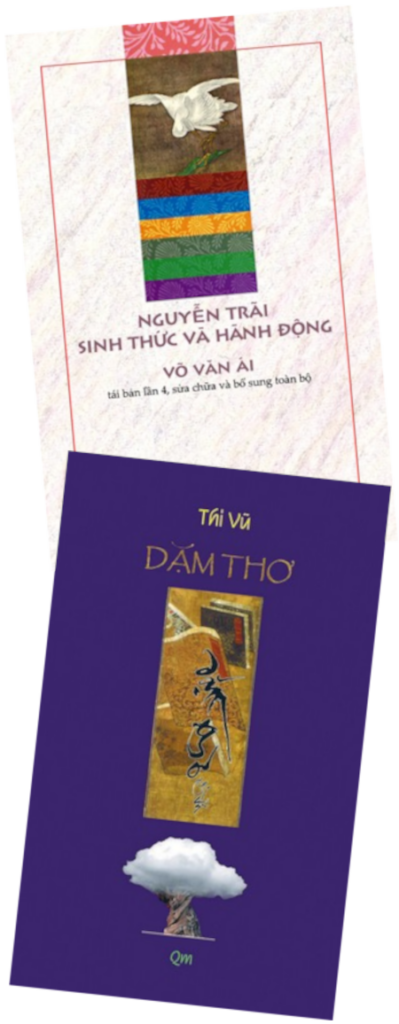
- Nguyễn Trãi, Sinh Thức và Hành Động [The Thinking and Action of XV Century strategist Nguyễn Trãi], (Quê Mẹ, Paris 1981, reprinted 1985, third printing 1992 – in Vietnamese)
- Mẹ [Mother] (Quê Mẹ, Paris, 1984 – in Vietnamese)
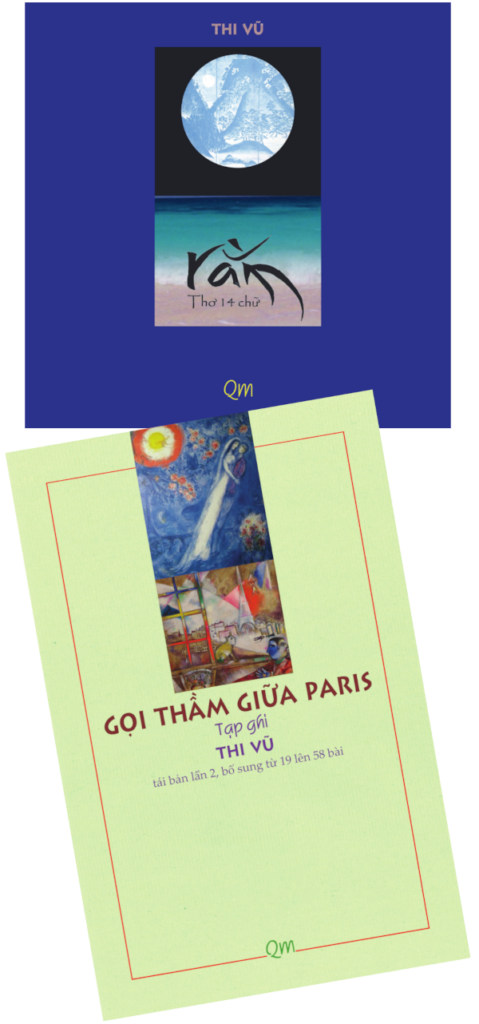
- Gọi Thầm Giữa Paris [Reflexions of a Vietnamese writer in Paris] (Quê Mẹ Paris, 1985, reprinted 2015 – in Vietnamese)
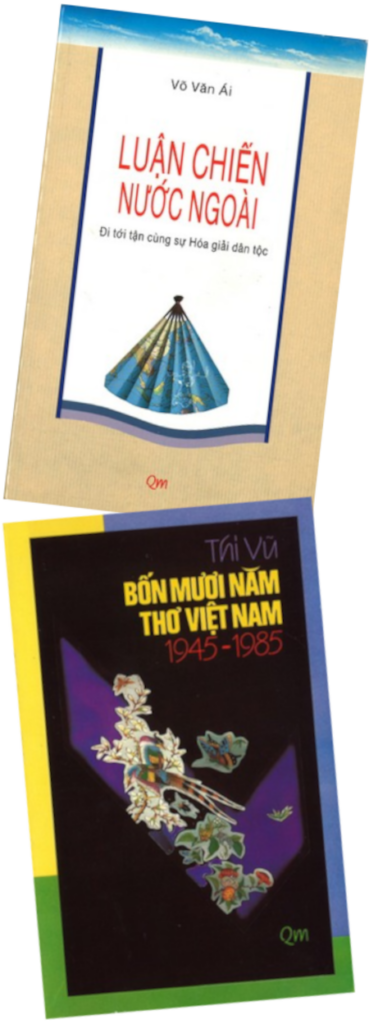
- Luận Chiến Nước Ngoài [The Battle for Democracy in Vietnam] (Quê Mẹ, Paris, 1990, reprinted in 1991 – in Vietnamese)
- 45 Năm Thơ Việt Nam [Forty Years of Contemporary Vietnamese Verse : 1945-1985] (Quê Mẹ, Paris, 1993 – in Vietnamese)
- Người Trí thức Hành động và Dẫn đường [Itinerary and Role of an Intellectual in the Movement for Democracy in Vietnam] (Quê Mẹ & Gió O, 2011 – in Vietnamese)
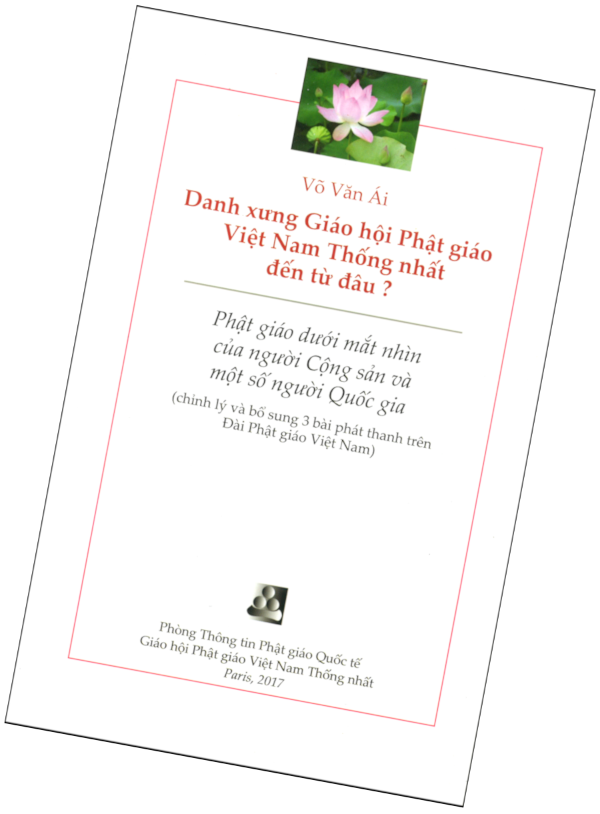
- Danh xưng Giáo hội Phật giáo Việt Nam Thống nhất đến từ đâu ? [The Origins of the name “Unified Buddhist Church of Vietnam”] Houston 2016 – in Vietnamese)
- Rằm [Full Moon], 14-word poems (Quê Mẹ, Paris, 2019 – in Vietnamese)
- Dặm Thơ [Poetical journey], selected poems (Quê Mẹ,Paris, 2019 – in Vietnamese)
International publications:
- Chapter on Vietnam, World Report on Freedom of Religion and Belief, (University of Essex, UK, 1997, Routledge Press)
- Human Rights and Asian Values in Vietnam (Nordic Institute of Human Rights (Copenhagen, 1997).
- International Prison Watch Annual Report (France, 1997, 1998)
- Liberté religieuse au Vietnam : les « valeurs asiatiques » contre la culture vietnamienne, Droit et culture, no 42, 2001/2 (Centre Droit et Cultures de l’Université Paris X Nanterre, France, 2001)
- The Challenges of Democracy in Asia, Intercultural Research Institute, Kansai Gaidai University, Japan, 2005.
- Universality and Particularity of Human Rights: A Vietnamese Buddhist’s Viewpoint, Institute of Human Rights and Peace Studies, Mahidol University, Thailand, Human Rights in Southeast Asia Series 1, SEAHRN, 2011.