The Story of Quê Mẹ
Every evening I stand at the back gate
Gazing toward my homeland—my heart aches ninefold
Quê Mẹ (Homeland) took its name from this popular folk poem. As the journal’s first issue explained, it captured the mindset of Vietnamese living far from home in those times of turmoil and uncertainty after the end of the Vietnam War:
For those of us living abroad, who among us does not harbour these feelings of heartache and nostalgia? Whatever the reason that has forced us to leave home, our hearts still turn back to our native land. Like a lover silently longing for a beloved. Like a sunflower persistently turning towards the golden rays of sun.
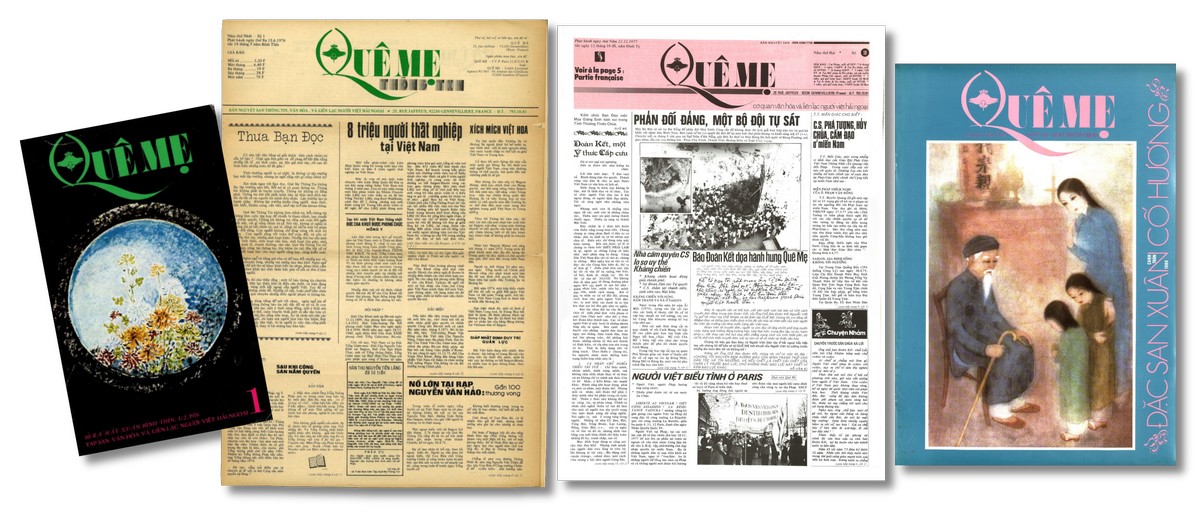
Quê Me No. 1, February 1976
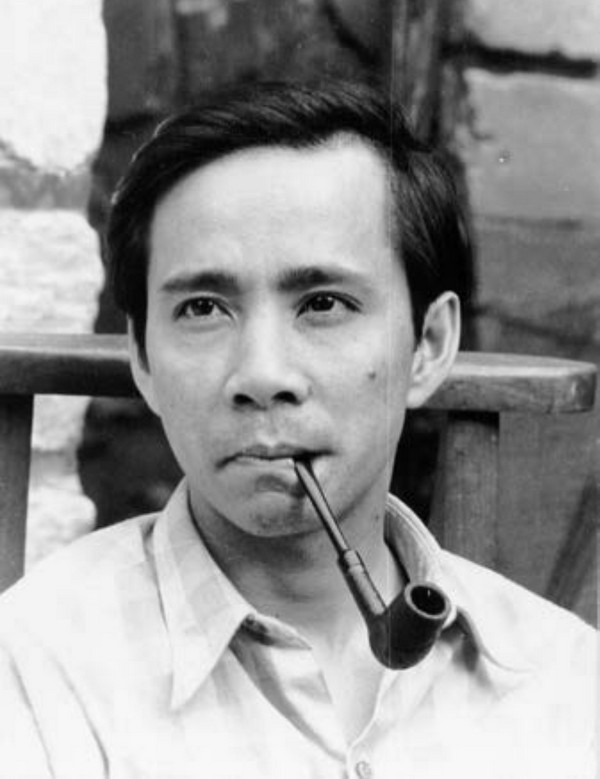
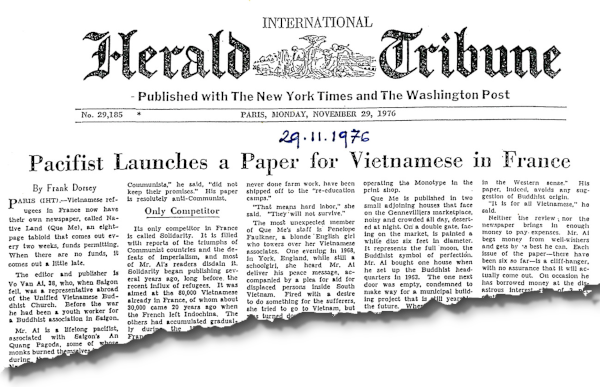
Writer, poet and human rights defender Thi Vũ – Võ Văn Ái founded Quê Mẹ in October 1975 with a group of Vietnamese writers and artists in Paris. Circulated in the Vietnamese diaspora worldwide and clandestinely in Vietnam, Quê Mẹ became one of the most influential Vietnamese-language journals of its time.
Quê Mẹ brought together leading Vietnamese writers, historians, journalists, artists, poets, academics and economists such as Võ Phiến, Phạm Công Thiện, Trần Hoài Thư, Thi Vũ, Trùng Dương, Nguyễn Thế Anh, Lê Mộng Nguyên, Đòan Đức Nhân… and also revealed a new generation of writers such as Nh. Tay Ngàn, Vũ Hoàng Thư, Ỷ Lan, Thường Quán, Phương Anh, Ái Anh, Lucien Trọng …
Quê Mẹ’s first issue, published in February 1976, was primarily a literary journal, printed in A 5 format and featuring poetry, short stories and essays.
However, as Vietnam closed its borders to the outside world and political repression unfolded under the new regime, Quê Mẹ focused increasingly on exposing abuses in Vietnam and campaigning for the respect of human rights. Quê Mẹ quarterly became Quê Mẹ News, a bimonthly tabloid newspaper. The word “News” was dropped after No. 6, but Quê Mẹ continued as a tabloid for 18 issues, before adopting a magazine format, which it kept until its last publication in January 2000.
Quê Mẹ’s human rights campaigns were widely reported in the international press, and supported by writers and intellectuals worldwide. Bilingual Special Editions commemorating 30th April 1975 contained articles written exclusively for Quê Mẹ by Eugène Ionesco, Natalya Gorbanevskaya, Léonid Plyush, Paul Goma, André Glucksmann, Joan Baez, Ilios Yannakakis, Brigitte Friang, Françoise Giroud and more.
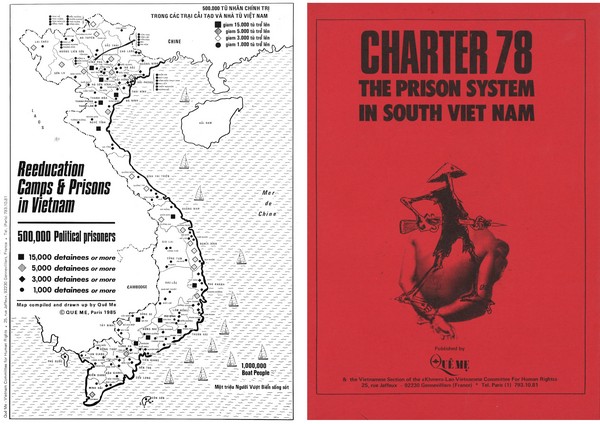
In 1978, Quê Mẹ published the very first report on the Prison System in Vietnam, compiling maps of re-education camps with an estimated population of over 800,000 political prisoners, including a list of 163 writers and artists, with first-hand testimonies on detention conditions smuggled from Vietnam. As a result of international pressure, many of these camps were closed and thousands of prisoners were released.
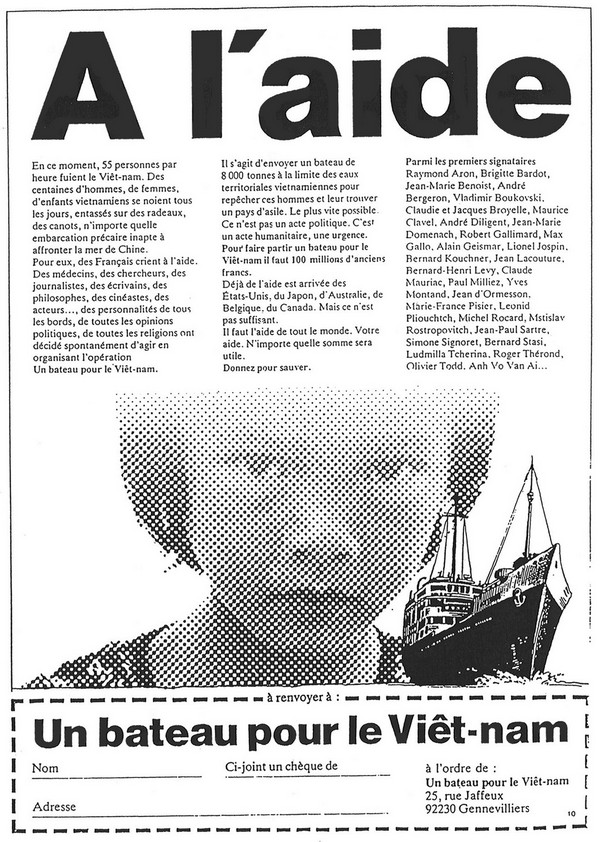
Quê Mẹ was the driving force behind the Boat for Vietnam campaign in 1979, a fund-raising effort to charter a ship to save boat people fleeing Vietnam. Võ Văn Ái mobilised the support of French artists and intellectuals including Jean-Paul Sartre, Raymond Aron, Yves Montand, Simone Signoret, Simone de Beauvoir, Lionel Jospin etc., and an appeal was published free of charge in the French press. The ship, “Ile de Lumière” (Isle of Light), rescued thousands of boat people in peril on the South China seas and brought them to safe haven in France.
In Vietnam, where Quê Mẹ circulated underground, the journal rapidly became the target of official repression. Quê Mẹ was foremost amongst hundreds of thousands of banned books and journals seized by the Communist authorities in a nationwide crack-down, reported in Hanoi’s “Review of Communism” in 1981.
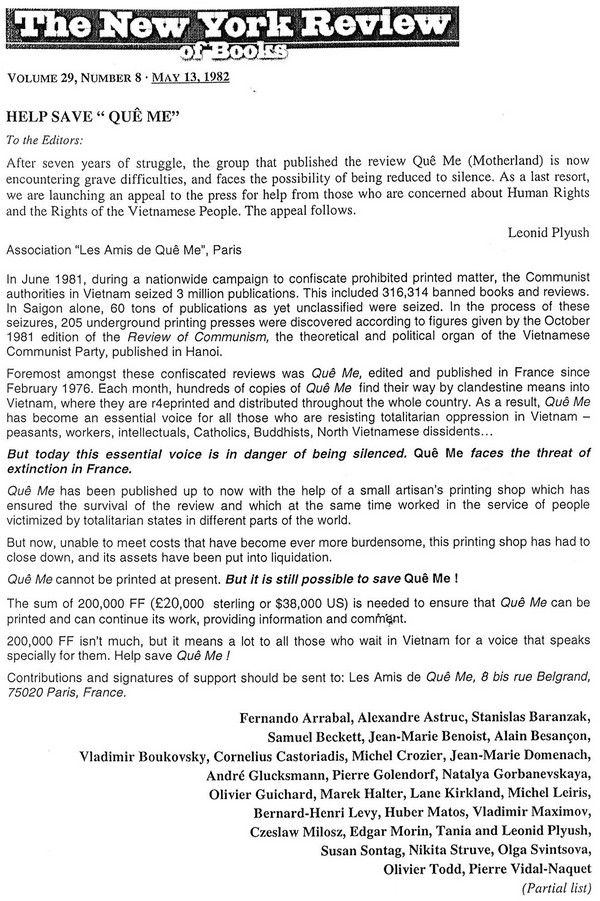
An appeal to support Quê Mẹ as an “essential voice for all those resisting totalitarian oppression in Vietnam” was published in the New York Review of Books in 1982, signed by hundreds of international personalities, including Nobel literature laureates Samuel Beckett and Czeslaw Milosz, as well as Leonid Plyush, Fernando Arrabal, Susan Sontag, Vladimir Bukovsky, labour leader Lane Kirkland and many more.
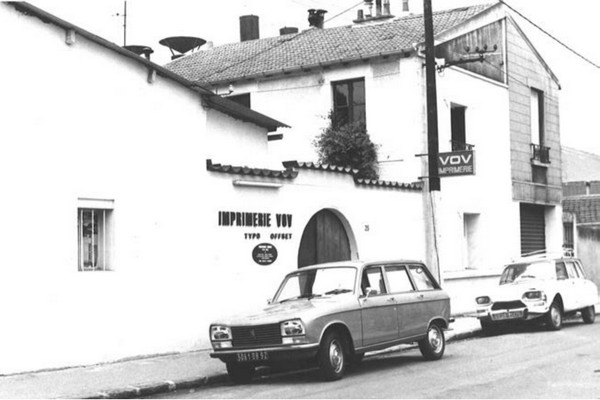
Quê Mẹ was published on Võ Văn Ái’s printing press in Gennevilliers, a northern suburb of Paris. Imprimerie VOV not only provided financial support for the journal, but was also an emblematic centre of solidarity for the dissident community in Paris. Known for its moon-shaped gate and the magnificent magnolia tree in its front yard, the press printed posters, flyers and newsletters at cost price or free of charge for dissidents from the Soviet Union and Eastern Europe, as well as pro-democracy activists from Cambodia, Vietnam, Laos, China and Tibet.
These activities drew the ire of the Communist municipality of Gennevilliers. Võ Văn Ái was subjected to intimidation and threats. The printing press was the target of an aborted arson attack, and its phone was repeatedly cut off.
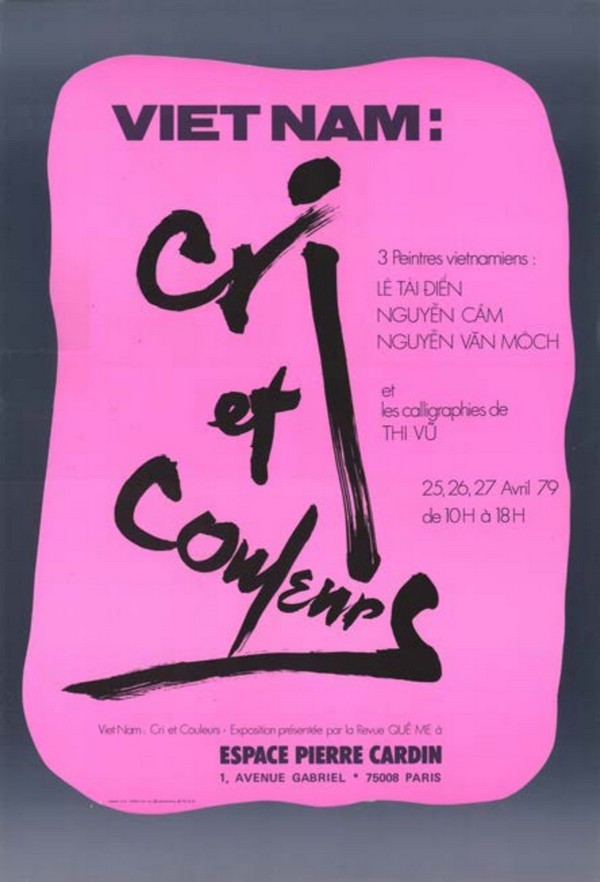
Despite these hardships, Quê Mẹ continued its actions to promote Vietnamese culture and human rights. Quê Mẹ organised exhibitions for Vietnamese artists (“Cries and Colours from Vietnam”) and music, theatre and martial arts performances at the Espace Pierre Cardin in the Champs-Elysées and the iconic Parisian concert hall, Olympia.
Quê Mẹ also held weekly cultural evenings in a small building adjacent to the printing press. Named the “Bamboo Tavern”, it provided a convivial space where Vietnamese singers, musicians and poets could continue to perform and create. Võ Văn Ái also founded Quê Mẹ Publishing House, which published a range of books on poetry, literature, history and democracy, including works banned in Vietnam, such as “Excommunicated”, the autobiography of Hanoi intellectual Nguyễn Mạnh Tường.
BBC television made a moving documentary on Quê Mẹ entitled “Artists in Exile” as part of its “Spirit of Asia” series, narrated by Sir David Attenborough.
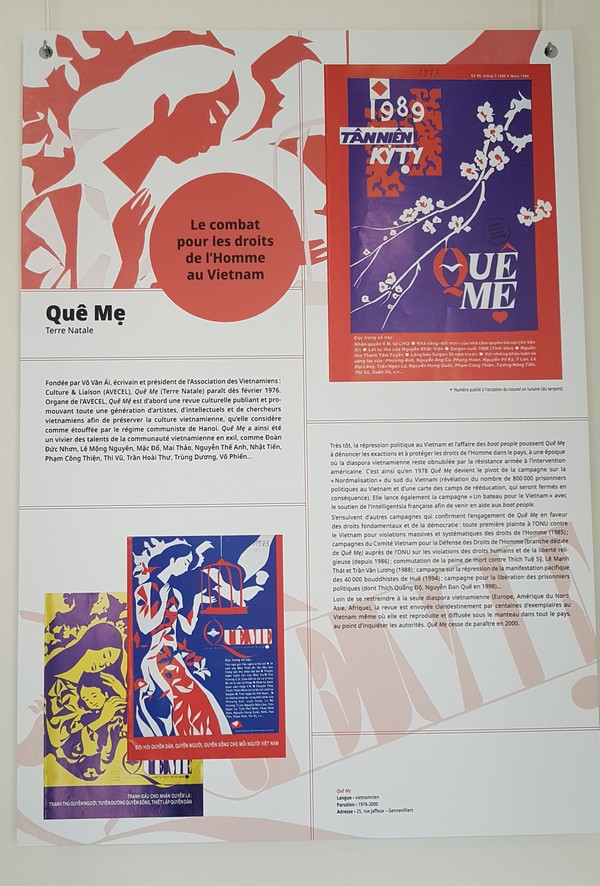
The prestigious University Library of Languages and Civilisations (BULAC) on Paris’ Left Bank highlighted Quê Mẹ in an exhibition on Vietnamese diaspora publications in 2022.
From the very outset, Quê Mẹ enjoyed an extraordinary relationship with its readers. Their warmth and solidarity went far beyond a simple subscription, providing support in many forms and enabling Quê Mẹ to survive and weather all storms.
Long before “crowd-funding” became common practice, Võ Văn Ái frequently appealed to Quê Mẹ’s readers to save the journal in times of financial crisis or to support its human rights campaigns. When, for example, Quê Mẹ received an astronomical telephone bill for its campaign to abrogate the death sentence on Buddhist monks Thích Tuệ Sỹ, Lê Mạnh Thát and former MP Trần Văn Lương, readers responded immediately. Not only was the bill swiftly paid, but the campaign was a success – the death sentences were commuted and all three men were later granted early release.
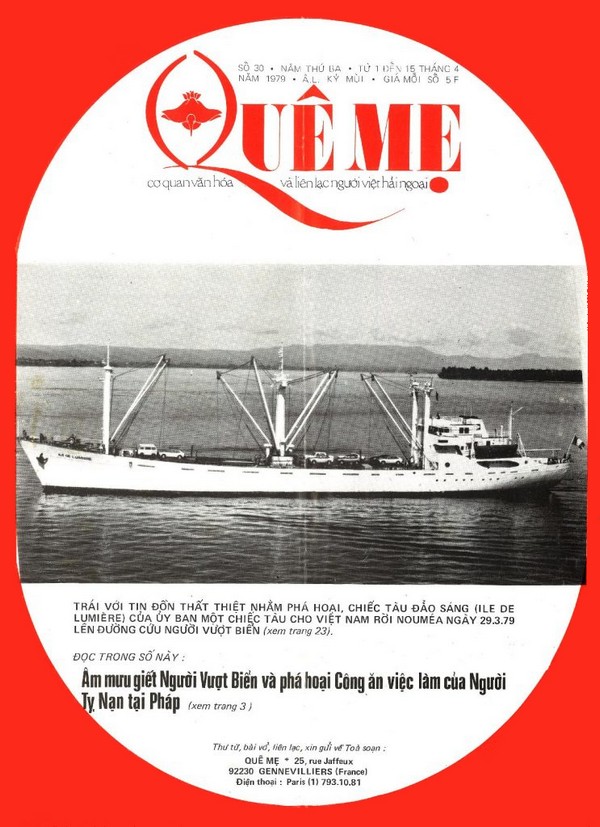
One reader in Switzerland paid his subscription in Italian espresso coffee beans to help Quê Mẹ staff stay awake through the long working nights. During the boat people exodus, when the French Communist trade union (CGT) blocked all attempts to charter a ship for Vietnamese refugees, salvation came from a Quê Mẹ reader in New Caledonia who proposed her husband’s ship, the Isle of Light. The ship would provide a true source of light and hope for the boat people on their ocean of darkness and despair.
Quê Mẹ was always eagerly awaited by its readers and can be considered a true “opinion-maker”. Quê Mẹ thus played an essential role in the emergence of a culture of human rights within the diaspora and in Vietnam.
Quê Mẹ ceased publication in January 2000. The printing press was obliged to close down after the municipal authorities in Gennevilliers requisitioned the land and succeeded in expelling Quê Mẹ at last. Without the press, publishing a journal in hard copy was too expensive, not to mention the costs of posting it to readers in all corners of the world. Quê Mẹ moved its office, library and archives to a suburb on the other side of Paris – and embraced the digital era for its future human rights campaigns.
If you have any questions
Contact us